She successfully completed her studies at the Faculty of Law of Comenius University in Bratislava in 2004. After graduating, she worked as a lawyer at the Land Registry Office for the Capital City of the Slovak Republic, Bratislava, and holds special professional qualifications to rule on registration applications. You can read more about JUDr. Zuzana Kováčiková in our interview.
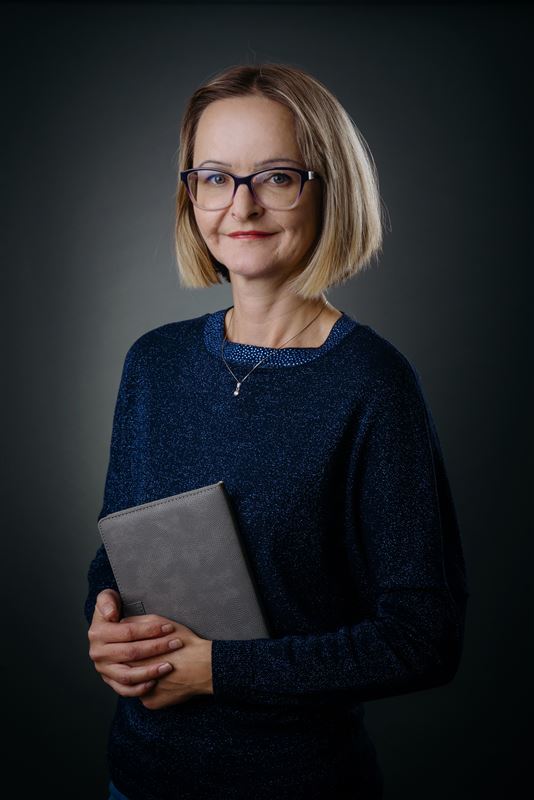
Welcome to the Hronček & Partners, s. r. o. team...
Tell us to start with... Why did you decide to study law?
Law has always been a clear choice for me. I’ve always enjoyed history and other humanities and social sciences. I wasn’t very good at math and physics, so it was an easy decision in my case.
During your university studies, you spent time in Milan. How would you rate the experience of studying law abroad, specifically in Italy?
I went through the Erasmus program, and back in 2003, it wasn’t as seamless as it is today. Back then, we went to the university for six months; they arranged housing for us, we received some pocket money to cover all these expenses, and as for the classes, they were taught mostly in Italian but also in English, so in terms of content, it didn’t really add much for me. I studied Italian during high school and college, so communicating in everyday conversation wasn’t a problem for me, but understanding technical terms was very challenging. From my perspective, it was more of a way to spice up my college studies. Getting to know a new culture and people, but professionally it didn’t offer me much, since the classes were conducted mainly in Italian.
You mentioned adding variety to your university studies and getting to know a new culture. Does that mean the typical Italian temperament influenced you in some way?
There were students from all over Europe—from Spain, Finland, and even Germany—so from that perspective, that’s what I meant by getting to know a new culture. As for Italy itself, I think it’s a nice place for a vacation, to explore its history, past, and cuisine, but I definitely wouldn’t want to live there, because their temperament and carefree attitude—the idea that they always have plenty of time—that kind of lack of precision and punctuality wasn’t to my liking. I’m completely different that way. I like precision and responsibility.
What particularly caught my attention in your resume is that you’ve worked in both the public and private sectors during your career. How is working for the government different?
So I was first in the civil service, then the private sector, then public administration, and now I’m back in the private sector. My career began in the civil service at the Land Registry in Bratislava, which is a large institution, given that it’s the capital of Slovakia, and so the scope of work is enormous.
When I started, applications for registration were processed one year after the statutory deadline, which was otherwise 30 days from the receipt of such an application. The advantage of working in the civil service is definitely the work schedule. From seven to three, and you go home, close the door behind you, and don’t have to think about that work for the rest of the day. But even back then, I was willing to process up to 20 registration applications a day; I even took work home with me, which was then reflected in my salary, which is normally set according to pay scales. That’s the good thing about public administration in terms of pay—there are pay scales and also performance-based bonuses. But I think it’s all about your attitude toward work. If you want to achieve something, you strive to improve every day. That’s also why I decided to try the private sector, which is a big difference compared to the civil service. I joined a law firm that had a large client base, including international clients, so I was able to use my language skills there, since I had studied at a bilingual high school. And there, the work hours were from morning to night; I even took work home with me, probably because I wanted it done well and not to cut corners—that’s a good character trait, but maybe not so good on the other hand. The work was definitely more time-consuming, and of course more demanding in terms of knowledge. I started there as a legal intern, then passed the bar exam in 2010 and stayed on to work as a lawyer. I bought an apartment in Bratislava because I thought I would be working there. But after a while, I realized that life in Bratislava was somehow wearing me down. I didn’t have a boyfriend, my social life was limited because I was swamped with work from morning to night, there were terrible traffic jams in Bratislava, and it all just got to me. So I decided to return to my hometown of Martin and find a job there. The Slovak Land Fund came to me like a godsend, and there I experienced the opposite shock—moving from the private sector to the public sector. I worked at the SPF for 9 years as a fund lawyer, and the bulk of my work involved representing the state and so-called unidentified owners in legal disputes.
Did the change in government affect you in any way in the public sector?
Not so far, because the same people were still in power. But now that the elections have taken place, a completely different group has come in, meaning there’s been a turnover of officials in leadership positions. It hasn’t really affected me that much—meaning they couldn’t fire me because of it—but the new managers are making changes that we as employees might not like, such as the reorganization of individual regional departments. From my perspective as a lawyer based in Martin, this change wouldn’t affect me that much, but it certainly would affect some other employees. And you can’t influence it—that’s the worst part of public administration. No one asks you there whether you agree or disagree; they present you with a done deal, and an employee in such an institution has to adapt.
For the past 9 years, you worked as a lawyer at the Regional Office of the Slovak Land Fund in Martin, where you handled complex legal matters and represented the Slovak Republic in legal disputes. Why did you decide to change your field of work and apply for a position at Hronček & Partners?
During those nine years at the Land Fund, I met my current partner, our daughter was born, and she is now five years old. So the reason I left Bratislava—to not focus solely on work—has essentially been fulfilled. And after those nine years, it was again a combination of various circumstances. One factor was the organizational changes at the fund, which were linked to the change in government. As I mentioned, these changes didn’t affect me directly, but I sensed them indirectly through my colleagues. And this, too, served as a kind of impetus for me to leave and try something different. Another factor was my age, because I realized I was 41, and in five years it might be too late to make this decision. I sent my resume to Hronček & Partners completely by chance. I hadn’t known the law firm at all before. A few days later, Mr. Hronček called me to ask what specific role I would like to take on at the law firm. And I couldn’t answer him at that moment because I hadn’t thought about it beforehand. But then I started thinking that I do have my bar exam, language skills—especially in English, which I studied in high school—and I had worked in English at a law firm in Bratislava, where I served as a legal trainee and later as an attorney. Another motivation was my daughter, who is, after all, already older. If she were a baby, it wouldn’t have been feasible in terms of time, but she’s already a preschooler.